







Trademark Registration in India
Establishing or building a brand without legally safeguarding it can be risky and can expose your business to serious risks. No matter if you’re launching a startup, starting a product based business, establishing an e-commerce store, or running professional service, understanding How to Register a Trademark in India and registering a trademark for your business ensures that your brand identity remains exclusively yours.
In this guide by courtroom Exchange on “How to Register a Trademark in India”, you will learn a step by step process including fees, process and as a bonus practical tip to avoid rejection.
What is Trademark?
Trademark is legally registered and legally recognised sign which is capable of distinguishing your goods and services from others. Trademark Law in India is governed by Trademarks Act, 1999. It can include:
- Logo or Device Mark
- Business Name/Trade Name/Brand Name
- Tagline or Slogan or Phrase
- Colour Combination or Sound
- Shape of Packaging
Benefits of Registering a Trademark in India
- Right to use ® Symbol
- Exclusive Ownership of the Mark across India
- Legal protection from infringement
- Builds trust and brand credibility
- Opens the door for Licensing and Franchising Opportunities
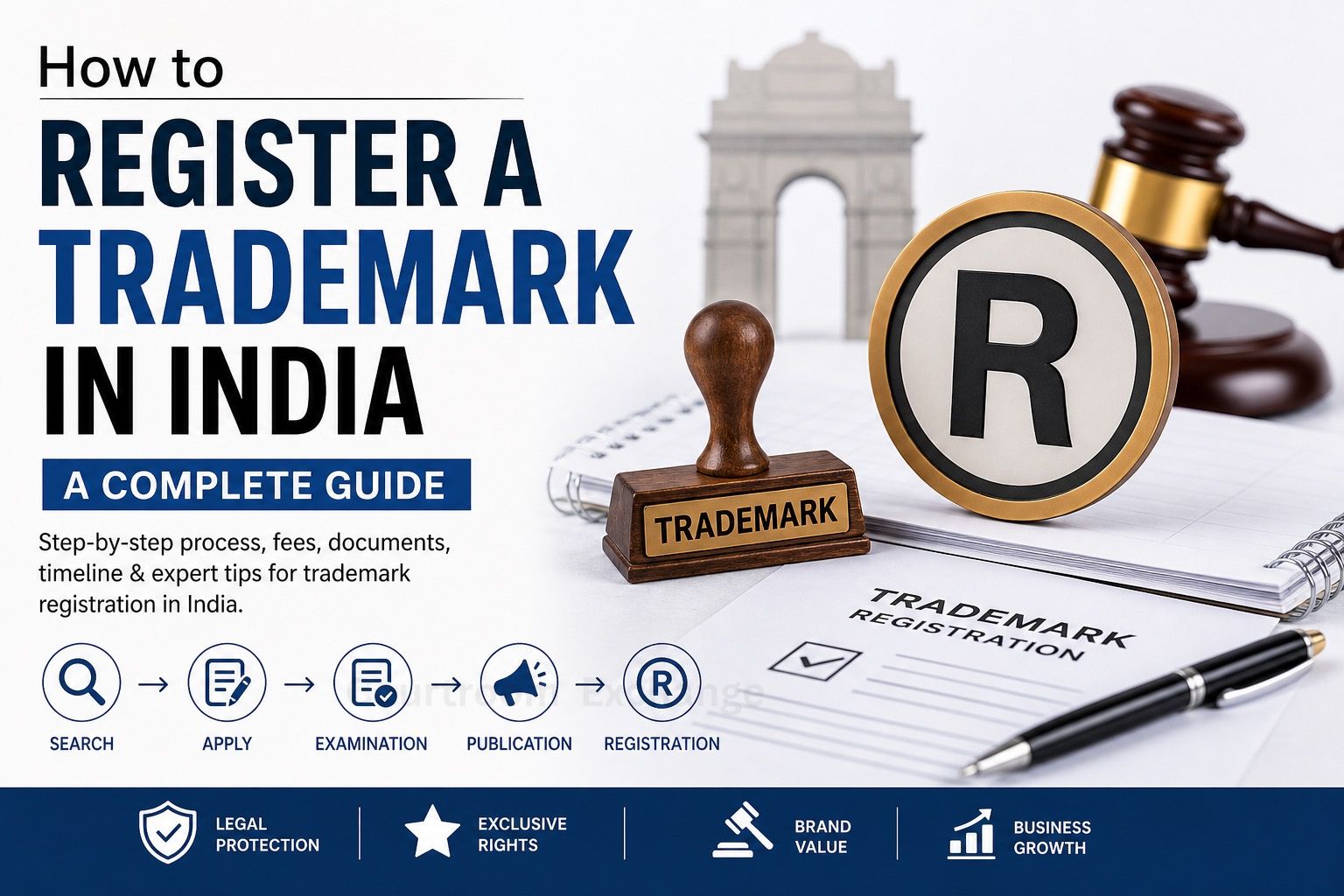
Step by Step Process on How to Register a Trademark in India
STEP 1: Trademark Search
Before registering trademark, it is very important to perform the search for the availability of the mark/Logo and if it’s unique or not. Perform the search through official portal
OFFICIAL TRADEMARK SEARCH PORTAL
Pro Tips For Registering a Trademark
- Avoid names that are too generic (For eg. Best Sports Shoes)
- Avoid Similar to Existing names or change in 1 or 2 alphabets. (For eg. Nike and Nikkkee Or Nikie etc.)
- Descriptive Names (For eg. 10 min delivery service)
STEP 2: Choosing Right Trademark Class
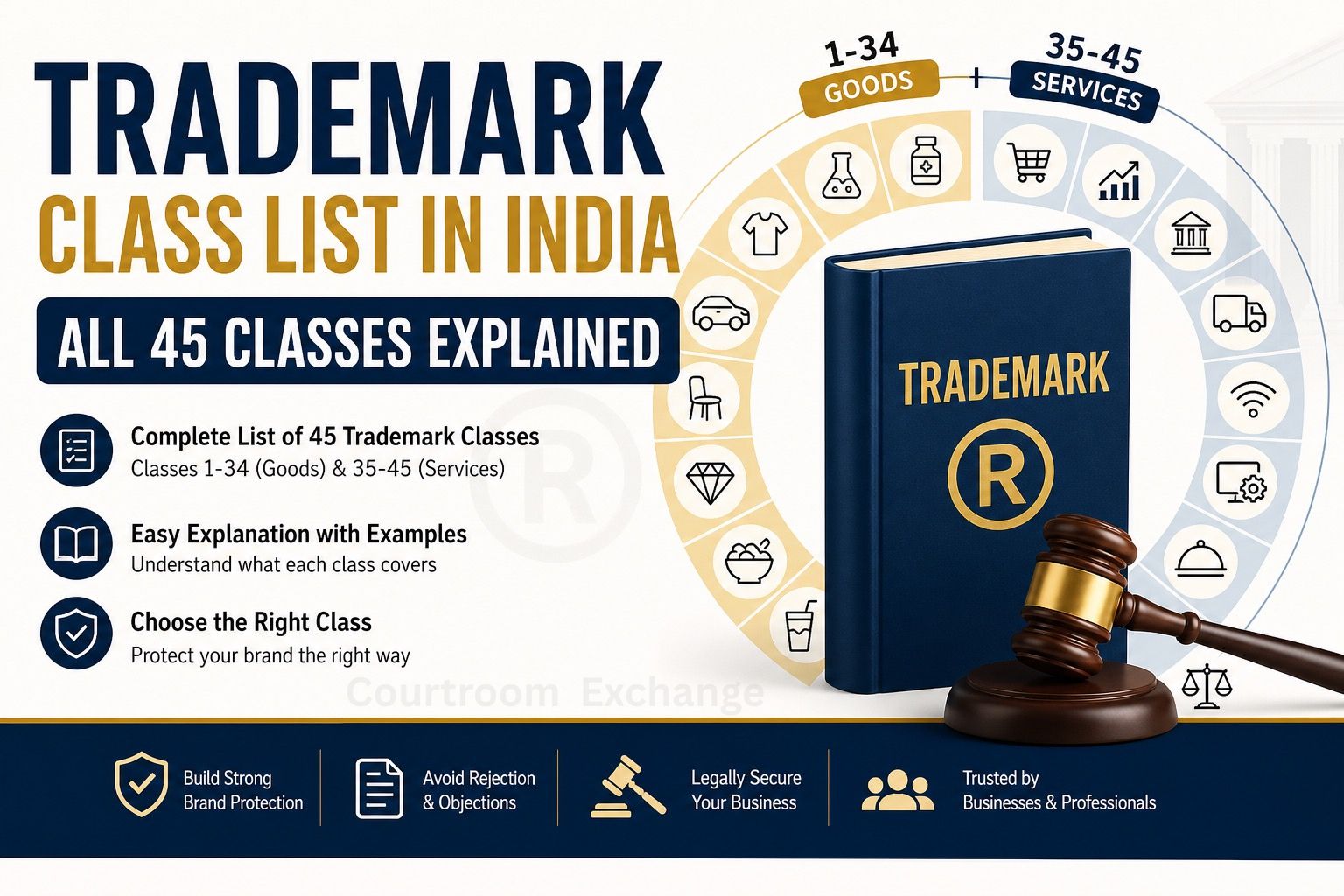
While registering a trademark selecting the right trademark class is very important. India follows the Niche Classification system with 45 Classes.
Class 1 – 34 : Goods
Class 35 – 45 : Services
Protection applies to selected category only so selection the right class is very important to avoid objection or rejection.
STEP 3: Form TM-A | Preparing the Trademark Application
Fill and File TM-A Form to apply for the trademark along with the documents which consists of Usage status (already in use / proposed to be use), Power of Attorney (POA) – If filed through a trademark lawyer or an agent, Logo.
STEP 4: Filing the Trademark Application
Trademark application can be filed online via IP India Portal and can also be filed physically at trademark registry offices. It is recommended to file online.
Once trademark application is filed and application number is generated you can start using the ™ Symbol.
STEP 5: Examination by Trademark Office
Once application is received by the trademark office, they will review it and will assign a status initially if they accept it, or will raise an objection under Section 9 and Section 11 of trademarks Act, 1999.
STEP 6: Replying to the Objections (If Any)
If objections are raised by the trademark registry, you should submit a strong legal reply within 30 days of receiving the objection. A strong legal reply can increase the chances of approval.
Common reasons which leads to objection of Trademark:
a. Similar Mark already exists
b. Lack of distinctiveness
c. usage of terms which are generic.
STEP 7: Publication of Trademark in Trademark Journal
If accepted, trademark is published in the Trademark Journal, after which public gets 4 months time to oppose the trademark. if no opposition is made, trademark is published.
STEP 8: If Opposition is Filed, Then Opposition Proceedings
If opposition is filed by someone, then both the parties submit the proofs and evidences, attend the hearing. Once hearing is concluded final order is passed by the trademark registry.
STEP 9: Trademark Registration Certificate
If you win, you will get a trademark certificate, after which you can use the ® symbol indicating full legal ownership.
Trademark Registration Fees in India
Trademark Registration Fees for :
Startups/Individuals/MSME : Rs. 4,500/- (Online) and Rs. 5000/- (Offline)
Companies & Others : Rs. 9,000/- (Online) and Rs. 10,000/- (Offline)
Note: Fees may vary based on government revisions)
Timeline on Registering a Trademark
If No Objection : 6 – 9 Months
with Objection : 9 – 18 Months
If Opposed : 18 – 24 Months
Validity & Renewal of Trademark
Trademark is valid for 10 years, once registered and can be renewed after every 10 years for indefinite time period. So,
Validity of Trademark : 10 Years
Renewal of Trademark : After every 10 Years.
Common Mistakes to avoid while registering a Trademark
- Avoid skipping search and directly applying the trademark
- Choosing common and generic names
- Filing the trademark under wrong class
- Ignoring objections, oppositions and timelines for replying
- Adding or changing few words of established brand and applying as new trademark.
Expert Tips to Get Faster Approval
- Always use unique, invented and Coined names.
- File early, even before launch of the brand.
- If unsure about the process, connect with professional for help
Final Thoughts
Trademark registration is a strategic step towards building a brand which will be legally secure and will be scalable. With proper planning and proper action, business identity can be protected while gaining the competitive business advantage.
If looking for serious business and long term brand growth of your business, then trademark registration is not optional – its essential.
FAQ’s on Trademark Registration
Trademark registration in India takes from 6 months to 12 Months if no objection is raised. If objection is raised or trademark is opposed then it can take 12 Months to 24 Months.
™ stands for Trademark applied for. It can be used instantly after application, which shows trademark is applied but still not registered.
® stands for registered Trademark. it can be used once trademark s registered and certificate is generated.
No, a trademark registration is not valid for lifetime. It is valid for 10 years but it can be renewed after every 10 years.
Yes, you can register trademark yourself, but taking professional help can decrease the chances of objection and can speed up the process.
ABOUT THE AUTHOR

This article is written by Advocate Akash Chaudhary (Member – Supreme Court Bar Association), Trademark Attorney (Attorney Code – 42066). Adv. Akash Chaudhary is specialised in Trademark and IPR Laws.